Hi, my name is Anne Elliott, and I am a certified childbirth educator with more than 25 years of teaching experience. I am also the mother of seven children, with experience in hospital birth, birth-center birth, home birth, and cesarean birth.
I am now a midwifery student, using PEP to prepare to take the NARM exam and become a CPM.
I am also a curriculum developer and the owner of a homeschooling publishing company, which we started in 2013. I have been a published author since 2005.
I’ve been reading midwifery textbooks for over 28 years, and it has been a lifelong dream to become a midwife. However, as a business owner, pastor’s wife, and generally busy mom — but with a lot of real-world experience creating curriculum — I have chosen to study on my own rather than attend school. Part of this is financial as well. I don’t have a lot of extra money, so I have chosen to use any extra money to purchase textbooks and midwifery supplies, plus maintain my car! 🙂
I am not offering this as a course where I give advice, because I’m simply on the same path you are. However, I am attempting to use good study techniques and document how I study and learn. If you want to study along with me, you are welcome!
This is a work in progress. Please bear with me.
Before You Begin
Be sure to download the most recent information on becoming a midwife. I recommend putting a reminder on your calendar once a year to check everything again. Things change!
- NARM (North American Registry of Midwives) – Certification
- ICM Essential Competencies for Midwifery Practice
- NACPM – What CPM pathways are honored by each state?
Textbooks on My Shelf
I use the current NARM textbook list (see p. 46). Purchase books as you’re able. I recommend buying one every week or two. Make it part of your budget.
- Coad – Anatomy and Physiology for Midwives
- Weaver – Practical Skills Guide for Midwives
- Davis – Heart and Hands
- Gaskin – Spiritual Midwifery
- Varney – Midwifery
- Myles – Textbook for Midwifery
- Frye – Holistic Midwifery, Vol I
- Frye – Holistic Midwifery, Vol II
- Oxhorn and Foote – Human Labor and Birth
- William’s Obstetrics
- Sinclair – A Midwife’s Handbook
- Frye – Healing Passage
- Frye – Understanding Diagnostic Tests in the Childbearing Year
- Gruenberg – Birth Emergency Skills Training
- American Academy of Pediatrics – Neonatal Resuscitation Textbook
- Mohrbacher – Breastfeeding Answers Made Simple
- Snell – Care of the Well Newborn
- Foster – Professional Ethics in Midwifery Practice
Here are other books on my shelf that I have found useful. Check back as I add more to the list occasionally.
- Birthsong Midwifery Workbook – highly recommended
- A used microbiology textbook
- Bates – Guide to Physical Examination and History Taking
- Tharpe, Farley, Jordan – Clinical Practice Guidelines for Midwifery and Women’s Health
- Johnson, Taylor – Skills for Midwifery Practice
- Weschler – Taking Charge of Your Fertility
- Barnes – The Ministry of Midwifery
- Staras – Communication in Midwifery
- Kitzinger – The Complete Book of Pregnancy and Childbirth
- Hoffman – Medical Herbalism
- Parker – The Naturally Healthy Pregnancy
- Simkin – The Birth Partner
- Dekker – Babies Are Not Pizzas
- Thurow – The First 1000 Days
- Placksin – Mothering the New Mother
- Heustis, Jenkins – Companioning at a Time of Perinatal Loss
- Birth Models That Work
- Gaskin – Ina May’s Guide to Childbirth
- Gaskin – Ina May’s Guide to Breastfeeding
- Nichols – Real Food for Pregnancy
- Nichols – Real Food for Fertility
- Nichols – Real Food for Gestational Diabetes
- Why Not Me? The Story of Gladys Milton, Midwife
- Breastfeeding and Natural Child Spacing
- Obstetric Myths Versus Research Realities
- Natural Childbirth the Bradley Way
- The First Forty Days
- Romm – The Natural Pregnancy Book
- Romm – Adrenal Thyroid Revolution
- White – The Herbal Doula
Recommended Study Methods
- Make flashcards.
It sounds old-fashioned, but writing a term on one side and a definition on the other side is a proven way to learn! You could use a digital app, but if you write out cards by hand, you will stimulate a different part of your brain and remember things longer. - Build a Midwifery Compendium.
A compendium is a collected reference of all the essential midwifery knowledge you will be gaining. I recommend that you organize your notes by topic. Click here for the topics I use.
If you want to keep track of everything on paper, then purchase file folders to hold them, or a BIG binder with dividers. If you prefer to keep track of everything digitally, I recommend Evernote‘s paid version. Make a “notebook” for each topic. One thing I love about Evernote is that I can install their extension on my web browser and save everything I find online by topic as well. Evernote can read my handwriting, and its search feature is awesome. - Create Quick Reference Cards.
These are concise, practical summaries of important clinical topics. Each card gathers key signs, assessment points, immediate actions, precautions, and referral or transport considerations in a format that can be reviewed quickly during study or practice. I use 4 x 6 cards. I purchased a box to hold them all, plus divider cards to keep them organized. I use the same topics as my compendium. - Write Care Plans and Case Studies.
It’s really important to apply what you’re learning to specific situations. I like to read birth stories and watch birth videos (even Call the Midwife), then write up a plan for what I would do. I like Ina May Gaskin’s books for this. Learn how to do differential diagnosis. Save these in your compendium. - Study with Others.
Have a study partner (or more) and set up a weekly time to discuss what you’ve learned. Review flashcards and quiz each other. Talk about care plans and case studies. Share research. Discuss ethical dilemmas and emergency scenarios. Take notes on how others would do things, even if you disagree. - Find a Midwife Preceptor Sooner Than Later.
Becoming an apprentice is key to learning, because you need to develop real midwifery thinking. Be brave! Meet midwives and ask if you can be one of their students. - Create a Study Spot and a Consistent Study Time.
Put study time on your calendar and treat it like an important appointment you cannot break. Three hours a day is a good place to start, but consistency is the most important thing, even if you have less time.
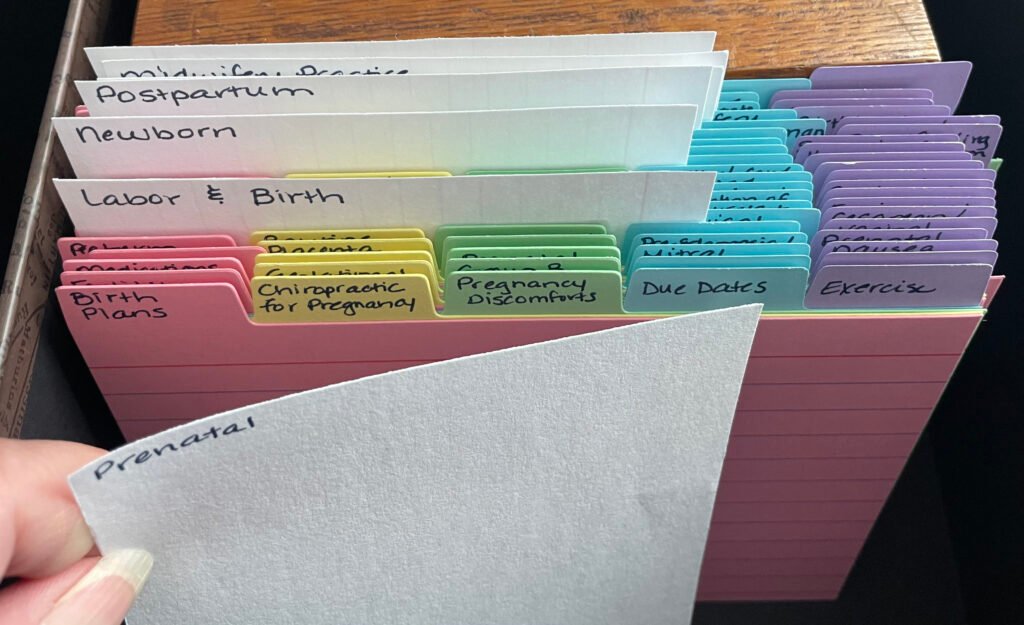
Suggested Topics:
Advocacy
- Advocacy: Homebirth Safety
- Advocacy: Hospital Safety
- Advocacy: Midwife/Client Relationships
- Advocacy: Midwifery Advocacy & Statistics
Labor/Birth
- Labor/Birth: Artificial Rupture of Membranes (AROM)
- Labor/Birth: Attending Breech Birth
- Labor/Birth: Birth Positions
- Labor/Birth: Cervical Lips
- Labor/Birth: Cesarean/VBAC
- Labor/Birth: Comfort Measures
- Labor/Birth: Eating & Drinking in Labor
- Labor/Birth: Epidurals & Drugs in Labor
- Labor/Birth: Equipment Setup
- Labor/Birth: Fetal Head Molding
- Labor/Birth: Fetal Monitoring & Heart Decels
- Labor/Birth: Hormones of Labor
- Labor/Birth: Induction of Labor
- Labor/Birth: Meconium
- Labor/Birth: Miscellaneous
- Labor/Birth: Nuchal Cord
- Labor/Birth: Perineal Protection/Episiotomy
- Labor/Birth: Posterior & Suboptimal Fetal Positions
- Labor/Birth: Prodromal Labor
- Labor/Birth: PROM – Prolonged/Prelabor Rupture of Membranes
- Labor/Birth: Pushing
- Labor/Birth: Shoulder Dystocia
- Labor/Birth: Stalled Labor
- Labor/Birth: Suturing
- Labor/Birth: Third Stage/Placenta/Postpartum Hemorrhage
- Labor/Birth: Transport
- Labor/Birth: Umbilical Cord & Delayed Cord Clamping
- Labor/Birth: Waterbirth
Midwifery Practice
- Midwifery Practice: Birthkeeping
- Midwifery Practice: Doulas
- Midwifery Practice: Education
- Midwifery Practice: Fertility Classes
- Midwifery Practice: Getting Clients/Starting a Practice
- Midwifery Practice: Legal Issues
- Midwifery Practice: Midwife Self Care
- Midwifery Practice: Money & Paperwork
- Midwifery Practice: Personnel/Apprentices/Assistants
- Midwifery Practice: Prenatal Care/Protocols
- Midwifery Practice: Supplies
Newborn
- Newborn: About Newborns
- Newborn: Bonding & Baby Birth Trauma
- Newborn: Care
- Newborn: Circumcision
- Newborn: Colic
- Newborn: Eye Ointment
- Newborn: Hepatitis B Vaccine
- Newborn: Hypoglycemia
- Newborn: Jaundice
- Newborn: Kangaroo Care/Immediate Newborn Care
- Newborn: Microbial Colonization of Newborn Skin & Gut
- Newborn: Miscellaneous
- Newborn: Neonatal Resuscitation
- Newborn: Rectal Temperatures
- Newborn: Screening for Critical Congenital Heart Defects
- Newborn: Screening/PKU/Heelsticks
- Newborn: Umbilical Cord Care
- Newborn: Vaccinations
- Newborn: Vitamin K
Postpartum
- Postpartum: Breastfeeding/Infant Nutrition
- Postpartum: Depression and Maternal Birth Trauma
- Postpartum: Fetal Cells Found in Maternal Birth Trauma
- Postpartum: Miscellaneous
- Postpartum: Perineal Care
- Postpartum: Sad or Unexpected Outcomes
- Postpartum: Well-Woman Care
Prenatal
- Prenatal: Birth Plans
- Prenatal: Chiropractic for Pregnancy
- Prenatal: Discomforts
- Prenatal: Due Dates
- Prenatal: Exercise
- Prenatal: Fertility/Infertility
- Prenatal: Gestational Diabetes
- Prenatal: Group B Strep (GBS)
- Prenatal: Herbs
- Prenatal: Herpes
- Prenatal: Medications/Teratogens/Substance Abuse
- Prenatal: Miscarriage
- Prenatal: Miscellaneous
- Prenatal: Mitral Valve Prolapse
- Prenatal: Nausea and Morning Sickness
- Prenatal: Nutrition
- Prenatal: Placenta Previa/Placenta Location
- Prenatal: Postdates
- Prenatal: Pre-Eclampsia/Toxemia/HELLP
- Prenatal: Prenatal Breech Issues
- Prenatal: Preterm Labor
- Prenatal: Routine Lab Work
- Prenatal: Screening & Ultrasound
- Prenatal: UTI
- Prenatal: Vaginal Infections